The Night I Bombed My Organic Chemistry Exam
Let me tell you about the stupidest thing I did during my sophomore year. I spent three weeks "studying" for my organic chemistry midterm while binge-watching The Office. I'd have my notes spread across my lap, laptop balanced on a pillow, convinced I was being super efficient. I mean, I was sitting there for hours, right? The content was definitely getting into my brain.
Wrong.
I got a 64%. My lowest exam score ever. And here's the kicker—I couldn't remember studying half the material that appeared on the test. It was like those three weeks had vanished into thin air. That failure forced me to dig into the actual research on multitasking, and what I found completely changed how I approach studying.
Turns out, there's a really good reason why your brain can't study and watch Netflix at the same time. And honestly? Once I understood the science, I felt less guilty about my terrible grade and more angry at myself for ignoring the warning signs.
Your Brain Doesn't Actually Multitask (It Just Switches Really Fast)
Here's the thing: what we call multitasking is actually just rapid task-switching. Your brain can't process two cognitively demanding tasks simultaneously. It's physically impossible.
When you're trying to study while watching Netflix, your brain is frantically bouncing between reading your textbook and following the plot. Researchers at Stanford found that people who regularly multitask are actually *worse* at filtering out irrelevant information than people who focus on one thing at a time. (I know, the irony is thick.)
Let me explain: imagine your brain's attention is like a spotlight. It can only illuminate one area at a time. When you shift that spotlight from your chemistry notes to Jim and Pam's relationship drama, there's a switching cost—usually about 0.5 to 2 seconds where your brain is basically doing nothing productive. Doesn't sound like much?
Add it up. If you're switching your attention every 30 seconds during a two-hour study session, you're losing somewhere between 2 to 8 minutes of actual cognitive processing time per hour. That's up to 16 minutes of your two-hour session just... gone.
The Science Behind Task-Switching Costs
Back in 2001, psychologist Joshua Rubinstein and his colleagues published research showing that task-switching can reduce productivity by up to 40%. Forty percent! When I read that study, everything clicked into place.
Your prefrontal cortex—the part of your brain responsible for executive function—has to work overtime when you switch tasks. First, it has to disengage from the current task (Netflix). Then it has to locate and reactivate the rules for the new task (studying chemistry). Every. Single. Time.
And studying isn't like scrolling social media. It requires deep processing, which means your brain needs to encode information into long-term memory. This process gets completely disrupted when you're constantly switching between your textbook and your screen. The information never makes it past your short-term memory.
That's why I couldn't remember studying. I literally hadn't stored it properly.
Why Netflix Is Particularly Dangerous for Studying
Now, you might be thinking: "But I study with music on all the time, and that's fine!" And you're right—there's a difference. (Though I'll get to why even that isn't ideal in a minute.)
Netflix and other video content are uniquely terrible study companions for three specific reasons:
1. Visual Competition: Your brain processes visual information through the same pathways whether you're reading text or watching TV. You can't actually see both simultaneously. Your eyes physically have to choose.
2. Narrative Pull: Good TV shows are designed by writers who understand storytelling psychology. They create cliffhangers, emotional arcs, and anticipation. Your brain releases dopamine when you're engaged with a story. Organic chemistry nomenclature? Not so much. Guess which one wins?
3. The Illusion of Familiarity: This one's sneaky. When I rewatched The Office, I told myself it was "just background noise" because I'd seen it before. But research shows your brain still processes familiar content—you're just not consciously aware of it. You're still using cognitive resources.
What About "Background" TV?
I've tested this extensively (because I really, really wanted it to work). I tried studying with shows I'd seen multiple times, thinking they wouldn't distract me. I tried documentaries. I even tried shows in languages I don't speak.
None of it worked as well as silence or instrumental music.
The closest I came to making TV work was with very specific nature documentaries—the kind with long, slow shots and minimal narration. But even then, my retention rate was probably 60-70% of what I could achieve in silence. Why handicap yourself?
Common Misconceptions About Multitasking and Studying
Misconception #1: "I study better with background noise"
Maybe you do! But there's a huge difference between white noise, instrumental music, or coffee shop ambiance versus dialogue-heavy TV shows. Your brain can habituate to consistent background sounds. It can't habituate to a constantly changing narrative.
Misconception #2: "Multitasking helps me stay awake"
Honestly, if you need Netflix to stay awake while studying, you're either studying at the wrong time or you're not getting enough sleep. (I'm not judging—I've been there.) But using TV as a stimulant is like using a sledgehammer to hang a picture frame. There are better solutions.
Misconception #3: "I'm just better at multitasking than most people"
I hate to break it to you, but the research is pretty clear: only about 2% of the population are "supertaskers" who can genuinely handle multiple cognitive tasks simultaneously. And even they show decreased performance compared to single-tasking. You're probably not in that 2%. (I'm definitely not.)
Misconception #4: "It's fine for easy subjects"
I could be wrong about this, but I think this might actually be the most dangerous misconception. When you multitask while studying "easy" material, you're training your brain to associate studying with divided attention. Then when you need to focus on hard material, your brain doesn't know how to sustain attention anymore.
What Actually Works: My Post-Failure Study System
After bombing that chemistry exam, I completely overhauled my study approach. Here's what I implemented (and what actually moved my GPA from a 3.1 to a 3.7 over the next three semesters):
1. The Pomodoro Technique (But Modified)
The classic Pomodoro is 25 minutes of work, 5-minute break. I found that too short for deep studying. My sweet spot was 45 minutes of completely focused studying, then a 10-minute break where I could actually check my phone or watch a bit of TV.
During those 45 minutes? Phone in another room. Laptop closed if I didn't need it. No music with lyrics. Just me and the material.
Was it uncomfortable at first? Absolutely. My brain was so used to constant stimulation that sitting in silence felt almost painful. It took about two weeks before focused studying started feeling natural.
2. Strategic TV Scheduling
Here's my controversial opinion: I don't think you should give up Netflix entirely. (Some productivity gurus will tell you to eliminate all entertainment, and frankly, that's unsustainable for most students.)
Instead, I started using TV as a reward system. Finish two focused study sessions? Watch an episode. Complete my flashcard review? Another episode. This actually made TV more enjoyable because I wasn't feeling guilty the entire time.
Plus, having something to look forward to made those focused sessions easier to start.
3. Environmental Design
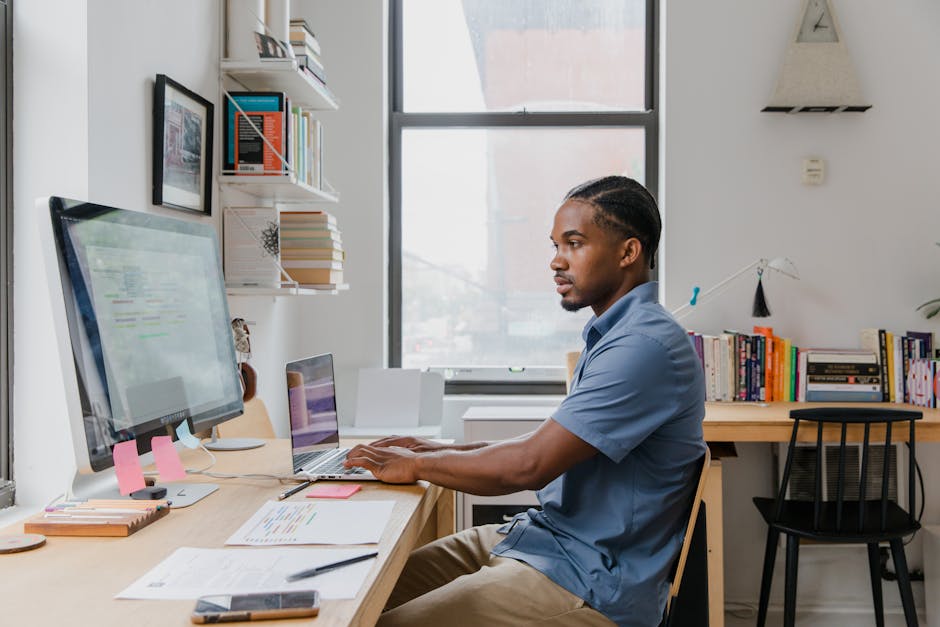
I couldn't study effectively in my room anymore—it was too associated with Netflix and relaxation. So I found specific study spots: a corner desk in the library, a particular table at a coffee shop, even my kitchen table when my roommates were out.
The physical separation helped my brain switch into study mode. When I was at my desk in my room, my brain expected Netflix. When I was at the library, it expected work.
4. Active Recall Instead of Passive Review
This changed everything. Instead of rereading my notes (which feels productive but isn't), I started testing myself constantly. Flashcards, practice problems, explaining concepts out loud to myself.
Active recall requires genuine focus—you literally can't do it while watching TV. The forcing function helped me stay honest about whether I was actually studying or just sitting near my textbook.
The Tools and Resources That Helped Me
I'm not affiliated with any of these companies, but here are the specific tools I used to rebuild my study habits:
Forest App ($2-4): Plants a virtual tree during your focus sessions and kills it if you leave the app. Sounds silly, but the gamification worked for me. I didn't want to murder my virtual trees.
Anki (Free): Flashcard app with spaced repetition. Requires active engagement, so you can't zone out. I used this for everything from vocabulary to chemistry mechanisms.
Freedom App ($7/month or $40/year): Blocks distracting websites and apps across all your devices. I used to use Cold Turkey, which was great back in 2019, but it got too complicated with too many features. Freedom is simpler.
Noise-canceling headphones: I saved up for Sony WH-1000XM3s (found them refurbished for about $200). Game-changer for studying in public spaces. You don't need the latest model—older versions work great.
Comparison: Study Apps I Tested
| App | Price | Best For | My Rating |
|---|---|---|---|
| Forest | $2-4 | Gamification motivation | 9/10 |
| Freedom | $40/year | Website/app blocking | 8/10 |
| Brain Focus (free alternative) | Free | Basic Pomodoro timer | 6/10 |
| Focus@Will | $10/month | Background music | 5/10 (not worth the cost) |
When "Multitasking" Actually Can Work
Let me be honest: there are times when doing two things at once is fine. The key is understanding the difference between cognitive multitasking and combining automatic tasks with cognitive ones.
Things I successfully do while studying:
- Walking on a treadmill at low speed (actually helps some people focus)
- Listening to instrumental music or brown noise
- Drinking coffee or snacking (though be careful not to let this become a distraction)
- Sitting in a moderately busy environment like a coffee shop
Things I absolutely cannot do while studying effectively:
- Watch any TV show or movie
- Listen to podcasts or audiobooks
- Have text conversations
- Scroll social media "just during breaks" (never stays just during breaks)
The difference? The first list involves automatic or non-linguistic tasks. The second list involves narrative, language processing, or social engagement—all of which compete directly with studying.
What About People Who Say It Works for Them?
I'm not 100% sure about this, but I think most people who claim they study effectively with Netflix on are experiencing one of three things:
1. They're actually not studying that effectively: They just don't have a baseline for comparison. If you've always studied with TV on, you might not realize you could retain 30-50% more information without it.
2. They're studying very basic material: Reviewing notes you've already mastered is different from learning new, complex concepts. Sure, you can review Spanish vocabulary you already know while watching TV. But try learning organic chemistry mechanisms that way.
3. They're not watching—they're listening: Some people have TV on but aren't actually watching it. At that point, it's just background noise (which still isn't ideal, but less harmful than active watching).
The Real Question to Ask Yourself
Instead of "Can I study with Netflix on?" ask yourself: "Why do I want to?"
When I really examined my motivation, I realized I was trying to make studying less uncomfortable. I didn't want to sit with the boredom and difficulty of learning hard material. Netflix was an avoidance strategy disguised as productivity.
That was a hard truth to face. But recognizing it was the first step toward actually changing my habits.
My Current Study Routine (Three Years Later)
I'm in grad school now, and my study habits look completely different than they did during my multitasking phase. Here's a typical study session:
7:00 PM: Close all social media. Put phone on Do Not Disturb and leave it in my bag.
7:05 PM: First 45-minute focus block. Usually active recall or practice problems. Noise-canceling headphones with brown noise if I'm not somewhere quiet.
7:50 PM: 10-minute break. Check phone, walk around, sometimes watch a YouTube video.
8:00 PM: Second 45-minute block. Usually reading or note-taking.
8:45 PM: Another 10-minute break.
8:55 PM: Final 45-minute block, often reviewing what I covered in the first two sessions.
9:40 PM: Done. Reward myself with an episode of whatever I'm watching, guilt-free.
That's 135 minutes of actual, focused studying. Before I quit multitasking, I'd spend 3-4 hours "studying" and probably get 90 minutes of actual cognitive work done. The math is pretty clear.
Pro Tips from Three Years of Single-Tasking
Pro Tip #1: Start small. If you've been multitasking for years, jumping straight to 45-minute focus blocks will feel impossible. Start with 15 minutes. Actually time it. You can do almost anything for 15 minutes.
Pro Tip #2: Track your distraction urges. I kept a tally on a piece of paper—every time I wanted to check my phone or turn on Netflix, I made a mark. Just the act of tracking reduced my urges by about half within a week. (Plus, it was eye-opening to see I was getting distraction urges every 3-5 minutes.)
Pro Tip #3: Study in the morning if possible. Your willpower is highest early in the day. I found evening studying while trying to resist Netflix way harder than morning studying before I'd even thought about TV.
The Bottom Line: Is the Truth About Multitasking Really That Simple?
Yeah, actually, it is.
Your brain can't study and watch Netflix simultaneously. The science is clear, the research is consistent, and (most importantly) my own experience proved it. Those three weeks I spent multitasking? I might as well have just watched Netflix and not pretended to study. At least I would've enjoyed it more.
The good news? Once you accept this truth and adjust your habits, studying becomes way more efficient. Those 45-minute focus blocks accomplish more than hours of divided attention. You finish faster, retain more, and actually have time to enjoy your shows without the nagging guilt.
Is focused studying harder? Yes. Does your brain resist it at first? Absolutely. Is it worth the adjustment period?
Ask me that after you see your next test score.
Your Next Steps
If you're ready to stop fooling yourself about multitasking (like I finally did), here's what I recommend:
- Pick one study session this week—just one—where you commit to zero Netflix, zero phone, zero distractions
- Set a timer for 25 minutes (start easy) and study one specific topic
- Notice how much you actually get done compared to your usual "multitasking" sessions
- Gradually increase your focus time as it gets easier
- Use TV as a reward, not a companion
That's it. You don't have to overhaul your entire life immediately. Just try it once and see what happens.
And if you're still convinced you're the exception who can genuinely study with Netflix on? I get it—I thought I was too. But maybe, just maybe, consider the possibility that you're fooling yourself like I was.
Your GPA will thank you.